Smoked Pulled Pork
If you're looking for a simple and delicious pulled pork recipe, this is it! Tender, juicy and full of smoky flavor... this smoked pulled pork is incredibly tasty, and it's so easy to make!

What is Pulled Pork
Pulled pork is an American "BBQ" dish, consisting of shredded pork butt that has typically been slow-smoked. The meat is shredded and sometimes mixed with a BBQ style sauce. Pulled pork is absolutely delicious and can be served in a number of ways. The two most popular are pulled pork sandwiches and pulled pork tacos, but there are so many creative ways to eat it!
Pulled pork can be made with either pork butt or pork shoulder. Both cuts of meat come from the shoulder of the pig, but pork butt (aka Boston butt or shoulder butt) is higher on the pig's foreleg and has a more uniform shape and consistent fat marbling throughout the meat. Because of this, pork butt is considered the best cut of meat for making tender and juicy pulled pork that will shred apart easily for sandwiches or tacos, so if you have a choice between the two, pork butt is the way to go!
At a Glance
• Main Ingredients: Pork shoulder (butt), pork rub, yellow mustard, BBQ sauce
• Cook Time: ~8 hours smoke + ~1 hour rest
• Flavor Profile: Deeply smoky, rich bark, juicy interior
• Best For: Big gatherings, sandwiches, tacos, nachos
Why We Love Pulled Pork
Pulled pork is one of our favorite BBQ dishes. We love smoking it on our Traeger grill. Not only is it delicious, it's also versatile! We love eating it on pulled pork BBQ sandwiches, tacos, baked potatoes and even nachos!
Because pork butt is one of the most inexpensive cuts of meat, it's perfect for your next Summer BBQ or family gathering. This cut of pork goes a LONG way, so it will feed many people on a budget, which is a plus! It's also one of the simplest meats to make on the pellet smoker, requiring just a few simple steps of preparation and a bit of patience. Our pulled pork recipe turns out tender and juicy every time!
If anybody has eaten his way through enough barbecue joints to have an opinion about pulled pork, it's Guy Fieri. He's sampled plenty of it over the years on Diners, Drive-Ins and Dives, including right here in Texas.
Guy has even described his ideal pulled pork as big chunks of tender pork topped with a good vinegar barbecue sauce and piled onto a crunchy roll.
We can't promise you a trip to Flavortown, but pile this smoky pulled pork onto a bun with your favorite barbecue sauce and a little slaw, and you'll be headed in the right direction. 🙂
Now, let's get to it!
Ingredients for Smoked Pulled Pork
These are simple ingredients you can pick up at your favorite local grocery store. You’ll find a full recipe card with measurements and nutritional information at the bottom of this post but here’s a quick look at what you’re going to need for this easy recipe.
- Bone-in Pork shoulder butt (10-pound weight recommended)
- Pork seasoning (we used Kev's Pig Love, but any brown sugar-based pork seasoning or rub will do)
- Yellow mustard
- Deep foil pan
- BBQ sauce

Tip: When selecting your pork shoulder, we recommend going with one that's symmetrical, so it gets a more even cook. A small fat cap is okay, as it will produce some juicy rendered fat during the cooking process, but make sure it doesn't have too thick a fat side. Any excess can always be trimmed off, if necessary. As far as selecting the correct size for your pork shoulder, we recommend counting on 2 servings per pound of meat. We used a 10-pound pork butt roast and it easily made 20 servings. Just remember, the larger your pork shoulder, the longer cook time you'll need overall.
How to Smoke the Best Pulled Pork
If you’re new to smoking or want a deeper breakdown of temperature, wrapping, and resting, be sure to check out our complete Texas-style smoking master guide.
Open the pork shoulder and remove all excess moisture with a paper towel.
Place the pork shoulder into a deep foil roasting pan.
Trim extra fat from the pork (if necessary).
Cover all sides of the pork shoulder with a thin layer of yellow mustard as a binder. You can also use a little bit of olive oil, if you prefer.


Season it generously on all sides with your choice of pork rub (we used Kev’s Pig Love Seasoning - link above).


Preheat your pellet grill to 225 degrees f (the low temperature will produce more smoke from the wood chips while cooking).
Place the pulled pork (in the roasting pan) on the grill and insert an internal thermometer into the thickest center part of the pork shoulder. Close the grill lid.
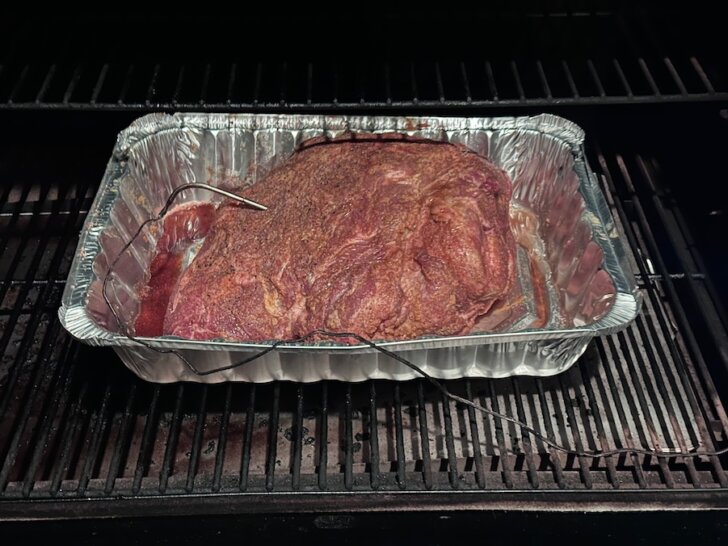
Cook the pork butt until the internal temperature of the meat reaches 160 degrees Fahrenheit (this could take anywhere from 3-5 hours, depending on how thick your pork butt is).
Once it reaches 160 degrees internally, carefully cover the roasting pan with foil, then increase the grill temperature to 250 degrees. Continue cooking your pork butt until the internal temperature reaches 204 degrees (this final cooking time could take another 3-4 hours).
Once the internal temperature is 204 degrees, remove the pan from the grill and let the pulled pork sit (covered in the pan) for about 45 minutes to 1 hour. (tip: you can also wrap the pork shoulder in butcher paper at this point and let it rest, but make sure to keep the fat juices in the foil pan to mix the pulled pork with after shredding).


Remove the bone from the pork shoulder, then use meat forks (or your hands) to shred up the meat, making sure to mix it in with all of the rendered fat juices from the pan.
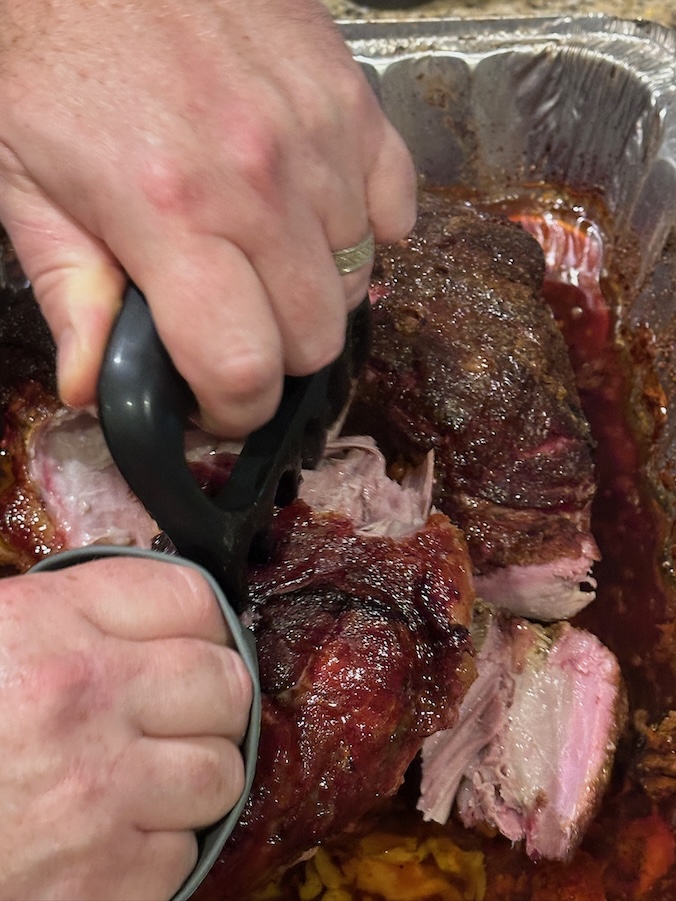

Add additional seasoning (to taste) and your favorite BBQ sauce and enjoy your juicy and flavorful pulled pork!
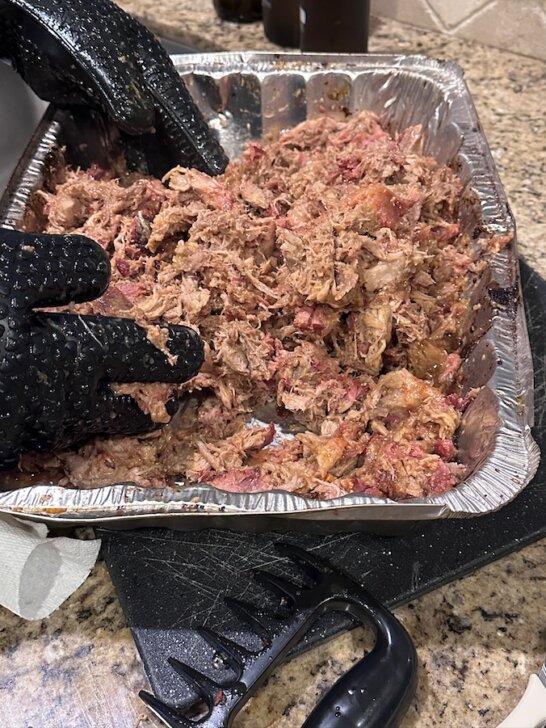
Store leftover pulled pork in the refrigerator in an airtight container, aluminum foil or plastic wrap and use it within 3-4 days. It can also be frozen and used within 4-6 months. Be sure to reheat it thoroughly before eating.
What to Expect from this Recipe
This smoked pulled pork is so juicy and tender, you can literally pull it apart with hardly any effort. During the low heat cooking process, the smokiness from the pellet grill adds a depth of flavor that is absolute perfection. The smoking process also creates a perfectly crispy bark on the outer edge of the pork roast, which is absolutely delicious! Mix in some Texas-style BBQ sauce and you've got the perfect main course!
You will love the versatility of this dish! Grab some Hawaiian buns and make a delicious pulled pork sandwich with barbecue sauce, pickles and onions. Spoon some of the shredded smoked pork butt onto a fresh, hot flour tortilla for the perfect taco. Add it to a baked potato with all the fixings. However you eat it, this smoked pulled pork will be a hit with your whole family. It's definitely one of our favorites!
Make it Your Own
We love serving this smoked pulled pork roast in the traditional BBQ recipes we've already shared, but if you're looking for some other fun ways to serve this dish, here are some great ideas!
Make a delicious pulled pork Mac & Cheese (see below for our amazing smoked panko mac & cheese recipe).
Give your pulled pork an Asian flare by mixing it with sweet Chile or teriyaki sauce. Serve it on fried rice or lo mein noodles, or even on tortillas with some pickled onions and sweet chili sauce.
Make a yummy pork quesadilla or some delicious pulled pork queso (we have a great recipe for queso too!).
If you want to keep the seasoning simple on your pulled pork, consider using some of the basics: garlic powder, onion powder, chili powder, cayenne pepper, black pepper and kosher salt. One great option is to make your own spice rub, if you're feeling adventurous!
Another great idea is to use a spray bottle to spritz your pork butt with apple juice or pineapple juice during the cooking process for added juiciness and sweet flavor! Apple cider vinegar is also an option.
The ideas are endless!
Frequently Asked Questions
Both cuts come from the shoulder area of the pig, but pork butt (also called Boston butt) sits higher on the foreleg and has more consistent fat marbling and a more uniform shape. That marbling is what makes it ideal for pulled pork — it breaks down beautifully during the long cook and keeps the meat incredibly juicy and tender. If you have a choice, go with pork butt every time.
Yellow mustard helps the seasoning stick to the surface of the meat so it doesn't fall off during the long smoke. Don't worry — you won't taste the mustard in the finished product at all. The smoke and cook time completely transform it. Olive oil works just as well if you're out of mustard.
The first phase at 225°F is all about building the smoke ring, developing the bark, and absorbing as much wood-fired flavor as possible. At 160°F the outside has a good crust formed. Covering with foil and increasing to 250°F essentially braises the pork in its own juices, which pushes it through the stall and brings it to that 204°F sweet spot where all the collagen breaks down and the meat shreds effortlessly.
The stall is when the internal temperature of the pork seems to stop climbing — often somewhere around 150–170°F. It can last for hours and is completely normal. Moisture evaporating from the surface cools the meat and temporarily halts temperature rise. Covering the pan with foil at 160°F helps push through the stall faster.
Temperature is your best guide — 204°F is the target. But tenderness is the real indicator. When you insert a thermometer probe and it slides in with almost zero resistance — like going through warm butter — the collagen has fully broken down and the pork is ready to pull.
Resting is one of the most important steps and the one most people skip. During the rest, the juices redistribute throughout the meat, making it significantly more moist and flavorful when you shred it. Don't rush this step — it makes a real difference in the final product.
I use a pair of heat-resistant gloves and pull the meat apart by hand — it's the fastest method and gives you the best control over the texture. Meat claws or two forks also work well. Make sure to mix the shredded meat back into all those rendered fat juices in the pan — that liquid is pure flavor.
How many people does a 10-pound pork shoulder feed?
Plan on roughly 2 servings per pound of raw meat, so a 10-pound pork butt yields about 20 servings. Keep in mind the pork loses 30–40% of its weight during cooking as fat renders out and moisture evaporates. It's still one of the most economical ways to feed a crowd.
The classics are sandwiches on brioche or Hawaiian rolls with BBQ sauce, pickles, and onions, or loaded tacos on flour tortillas. But pulled pork is incredibly versatile — try it on baked potatoes with all the fixings, stirred into mac and cheese, loaded onto nachos, mixed into quesadillas, or even served over rice.
Store in an airtight container in the refrigerator for 3–4 days, or freeze for up to 4–6 months. To reheat, place the pulled pork in a covered pan with a splash of apple juice or chicken broth and warm in a 325°F oven, or heat slowly in a saucepan on the stovetop. Adding a little extra BBQ sauce before reheating keeps it moist and flavorful.
What to Serve with Smoked Pulled Pork
Here are some of our favorite dishes that would go perfectly with our smoked pulled pork. Give them a try and let us know what you think!
If you're looking for the perfect appetizer to go along with this dish, check out this Fresh Strawberry Dip from Miz Helen's Country Cottage. It looks so tasty and refreshing!
For the perfect side dish, give our Smoked Mac and Cheese with Panko recipe a try. It's creamy and delicious, and the perfect complement to our pulled pork!
Our Sweet and Savory Southwest Beans are absolutely delish, and they make the best side for pulled pork!
Nothing completes a meal quite like bread! Give our delicious Cheesy Garlic Bread recipe a try for a savory and flavorful side!
Try this yummy Simple Chocolate Pudding recipe from Out of the Box Baking for the perfect dessert!
This is just one of our favorites—see them all here:
👉 The Ultimate Guide to Backyard Grilling Recipes (Texas Style)
Thanks for Stopping By!
That's it for this post, friends! We hope you enjoy this tender and flavorful smoked pulled pork shoulder recipe. It rivals anything you'll get in a pricey BBQ restaurant, and it's one of our favorite recipes!
If this recipe made you hungry for more, you’ll want our list of the ten best Texas BBQ joints.
Why Not Pin Some Pics While You’re Here?


About the Man Behind the Grill

Zach Morrow was born and raised in Texas and has always had a passion for great barbecue. He’s at home behind the grill and loves to feed his friends and family home-cooked favorites as often as he can. He especially loves trying new things and is excited to produce recipes like this one for Backyard Texas Grill.

Smoked Pulled Pork
This smoked pulled pork is juicy, tender and full of delicious smokey flavor!
Ingredients
- 10-pound bone-in Pork shoulder (approx. size we recommend)
- Pork seasoning (we used Kev's Pig Love, but any brown sugar based seasoning or dry rub will do)
- Yellow mustard
- Deep foil pan
- BBQ sauce
Instructions
- Open the pork shoulder and remove all excess moisture.
- Place the pork shoulder into a deep foil roasting pan.
- Trim extra fat from the pork (if necessary).
- Cover all sides of the pork shoulder with a thin layer of yellow mustard as a binder.
- Season it generously on all sides with your choice of pork rub (we used Kev’s Pig's Love Seasoning).
- Preheat your smoker to 225 degrees (the lower the temperature, the more smoke you'll produce).
- Place the pulled pork (in the roasting pan) on the grill and insert internal meat thermometer into the thickest center part of the pork shoulder. Close the grill lid.
- Cook the pork butt until the internal temperature reaches 160 degrees Fahrenheit (this could take anywhere from 3-5 hours, depending on how thick your pork butt is).
- Once it reaches 160 degrees internally, carefully cover the roasting pan with foil, then increase the grill temperature to 250 degrees. Continue cooking the pork butt until the internal temperature reaches 204 degrees (this could take another 3-4 hours).
- Once the internal temperature is 204 degrees, remove the pan from the grill and let the pulled pork sit (covered in the pan) for about 45 minutes to 1 hour. (tip: you can also wrap the pork shoulder in butcher paper at this point and let it rest, but make sure to keep the fat juices in the foil pan to mix the pulled pork with after shredding).
- Remove the bone from the pork shoulder, then use meat forks (or your hands) to shred up the meat, making sure to mix it in with all of the rendered fat from the pan.
- Add additional seasoning (to taste) and BBQ or sauce of your choice and enjoy your juicy and flavorful pulled pork!
Nutrition Information:
Yield: 20 Serving Size: 1Amount Per Serving: Calories: 675Total Fat: 49gSaturated Fat: 18gTrans Fat: 0gUnsaturated Fat: 26gCholesterol: 208mgSodium: 196mgCarbohydrates: 1gFiber: 0gSugar: 1gProtein: 54g